
How to create a perfect single-shot sequence without any cuts

The long take represents one of the most demanding technical feats in contemporary cinema. This continuous shot, filmed without any visible interruption in the editing, requires complete mastery of directing, meticulous coordination of the technical teams, and rigorous preparation. Achieving a perfect long take without any cuts is not a matter of chance: it is the result of painstaking planning and flawless execution. This article details the essential steps for conceiving and shooting long takes , from pre-production to post-production.
The fundamentals of the sequence plan
A long take is technically defined as a narrative unit filmed in a single camera movement, without any cuts in editing. Unlike traditional editing, which fragments space and time, the long take preserves temporal and spatial continuity, creating a unique immersive viewing experience. This technique requires the simultaneous management of multiple parameters: fluid camera movement, synchronized actor movements, consistent lighting transitions, and maintaining focus throughout the entire sequence.
Historically, Orson Welles with the opening of Touch of Evil (1958) and Alfred Hitchcock with Rope (1948) demonstrated the dramatic power of this approach. Today, filmmakers like Alfonso Cuarón (Gravity, Children of Men) and Sam Mendes (1917) are pushing technological boundaries to create long takes lasting several minutes, or even entire films seemingly shot in a single take.
Preparation and pre-production: the key to success
The success of a long take hinges primarily on what happens before filming. The pre-production phase must include an extremely detailed storyboard, ideally supplemented by 3D visualization or rehearsals with stunt doubles. Every second of the shot must be timed, every movement precisely mapped out.
Location scouting is crucial: you need to identify spatial constraints, areas of shadow or overexposure, narrow passages for equipment, and possible trajectories for the actors and camera. Organize regular technical meetings bringing together the director of photography, key grip, gaffer, and production designer. Coordination between departments determines the feasibility of the shot: a light source must be able to be hidden, a section of the set must open up for the Steadicam, and extras must clear an area at the precise moment.
Schedule extensive rehearsals with floor markings and timing. The actors must internalize their movement choreography, while the Steadicam operator rehearses their trajectories until they become automatic. This intensive drill phase transforms apparent complexity into a mastered routine.
Technical choices and equipment
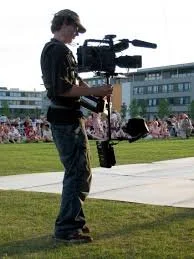
The long take imposes specific equipment constraints. Prioritize cameras offering sufficient recording time and ergonomics suited to extended movements. Stabilization systems are the core of the technical system: Steadicam for fluidity and mobility, crane or Technocrane for wide vertical movements, dolly tracks for linear trajectories, or drones for aerial shots outdoors.
The choice of lenses directly impacts success: a fast prime lens (35mm or 50mm on full-frame) offers controllable depth of field and consistent optical quality. Professional zooms allow for framing variations during movement, but require precise coordination with the first camera assistant to maintain focus.
Synchronous sound recording presents a major challenge: boom mics must follow actors off-camera, wireless microphones must be perfectly tuned, and any source of background noise (air conditioning, traffic) must be eliminated. Anticipate the impossibility of cleaning up the sound in post-production without compromising the continuity of the shot.
Direction and choreography of the filming
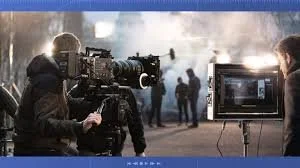
On the day of filming, the approach to directing actors evolves: it's no longer about fragmenting emotions into close-ups and wide shots, but about building a continuous dramatic tension. The actors must manage their emotional intensity throughout the entire shot, without the possibility of partial reshoots. Clearly explain the narrative stakes of each segment so they can modulate their performances accordingly.
On-set communication becomes vital: establish a system of visual or radio signals between the director, camera operator, key grip, and production manager. A mistake in the 3rd minute of a sequence shot can ruin the entire take. Every technician must know their role down to the second: moving a light, opening a door, removing a prop.
Plan a realistic number of takes (rarely fewer than 15-20 for a complex shot) and manage the physical and mental exhaustion of the crew. Between each take, debrief quickly but thoroughly, focusing on areas for improvement. Patience and rigor are your best allies.
Pitfalls to avoid and solutions
The most common mistake is underestimating the complexity of the long take and improvising on set. A lack of preparation condemns the project to endless takes and a subpar result. Never give in to the temptation of "we'll see when we shoot."
Another pitfall: neglecting continuity of light. A shot that moves between several spaces with different lighting requires gradual, imperceptible transitions. Work closely with your cinematographer to create these light bridges.
Excessive length also poses a risk: an tracking shot may seem virtuosic, but if it doesn't serve the narrative, it becomes pointless. Systematically question the dramatic relevance of this approach for each sequence. Also, plan for "exit points": moments where an invisible cut remains possible if the shot becomes impossible to execute in its entirety.
Finally, anticipate unforeseen events: an actor forgetting their lines, an extra appearing in the shot, or a technical equipment problem. Develop contingency plans and remain calm under all circumstances.
Post-production and finishing

Contrary to popular belief, long takes require meticulous post-production work. Color grading must manage subtle variations in light throughout the shot, preserving color consistency and exposure balance. Secondary correction tools allow for seamless integration of different areas within the frame without any visible breaks.
Sound mixing demands meticulous attention: variations in the actors' distance from the microphone, the sounds of moving equipment, and ambient noises must be balanced while preserving a natural feel. Sometimes, subtle digital adjustments are necessary: removing an unwanted reflection or a distracting element from the periphery of the frame. These interventions, while invisible, do not betray the spirit of the long take.
Ultimately, the choice of the final take results from a balance between technical perfection and emotional accuracy. Always prioritize the truth of the performance over mechanical virtuosity: a sequence shot never achieves its narrative objective.
Want to deepen your mastery of long takes? Discover our comprehensive collection of the greatest long takes in film history at plan-sequences.com.