

Top 50 best long takes in film and television
The long take is the most demanding technique in cinema: filming an entire scene, sometimes several minutes long, without any visible cuts. There's no room for error. Just actors, a camera, and perfectly executed choreography. This top 50 list of the best long takes in film history brings together the most memorable scenes in the world of cinema, from pioneers like Orson Welles and Alfred Hitchcock to the long takes that have generated buzz in recent years on Netflix and Apple TV+. Cult classics, blockbusters, series, art-house films: there's something for everyone. Click on each title to discover the complete analysis of the scene.

#1 - 1917 (2019) by Sam Mendes
Sam Mendes pretended to shoot an entire war film without a single cut. Two soldiers cross enemy lines to deliver a message that could save 1,600 lives, and the camera never leaves them. We breathe with them, we sweat with them. This is the film that brought the long take back to the heart of mainstream cinema.

#2 – Birdman (2014) by Alejandro González Iñárritu
The entire film gives the illusion of unfolding in a single, continuous shot, without any visible cuts. We follow a fading actor attempting to stage a play on Broadway, haunted by his former superhero persona. The camera darts between backstage and onstage with breathtaking fluidity. Winner of four Oscars, including Best Picture, and boasting a directing style unlike anything seen before.
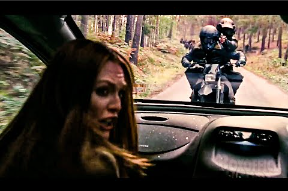
#3 - Children of Men (2006) by Alfonso Cuarón - The car ambush
The camera is trapped inside a car just as an ambush erupts without warning. No music, no editing, no special effects. Just the raw violence of an attack, filmed as if you were right there. This scene is considered one of the greatest technical achievements in the history of cinema.

#4 – Goodfellas (1990) by Martin Scorsese
The tracking shot at the Copacabana is probably the most famous single-take shot in the history of cinema. The camera follows Henry Hill and Karen as they enter the club backstage, walk through the kitchens and corridors, and arrive at their table in a single movement lasting over three minutes. Scorsese wanted to show how the Mafia opened every door, and he did so with a camera that never stops. A shot that has influenced generations of film buffs and directors.

#5 - Touch of Evil (1958) by Orson Welles
This marks the birth of the modern long take. Orson Welles opens his film noir with a shot lasting over three minutes, a crane hovering over a car bomb as it crosses the Mexican border. No editing, no cuts, just absolute mastery of space and time. This shot is still taught in film schools worldwide.

#6 - Old Boy (2003) by Park Chan-wook
The corridor. That's what film buffs call this iconic scene from Korean cinema. An exhausted man, armed with a hammer, advances against a dozen opponents in a narrow corridor. The camera films everything from the side, in a single, seemingly endless horizontal shot. It's raw, brutal, and unforgettable.

#7 - True Detective - Season 1, Episode 4 (2014)
Rust Cohle infiltrates a gang and must exfiltrate an undercover suspect. What follows is a six-minute, real-time tracking shot in a burning city, featuring chases, altercations, and unbearable tension. HBO had just proven that television could outdo cinema. This scene is still cited today as one of the craziest moments in television history.

#8 - Rope (1948) by Alfred Hitchcock
Hitchcock wanted to shoot an entire film in a single take. The technology of the time didn't allow it, so he concealed his cuts within shots of backs or dark objects, creating the perfect illusion. The result is an 80-minute chamber drama with a corpse hidden in a trunk. This film invented the concept of the "faux" long take, later taken up by Iñárritu and Mendes.

#9 – Boogie Nights (1997) by Paul Thomas Anderson
The film opens with a nearly three-minute shot that presents nine main characters in a single, uninterrupted movement in a Los Angeles nightclub. The camera descends on a crane from the street, switches to a Steadicam, and enters the club without any visible transition. Anderson was 27 years old and directing his second film. It's an avowed homage to Scorsese and Altman, and it already stands at the level of the masters.

#10 – Atomic Blonde (2017) by David Leitch
The stairwell scene lasts almost ten minutes and is unlike anything seen before in a spy film. Charlize Theron fights, falls, gets back up, and loses energy realistically throughout the shot. We see the characters get winded, injured, and yet still carry on. It's brutal, human, and visually stunning.

#11 - Victoria (2015) by Sebastian Schipper
This German film was shot in a single, continuous take. No hidden cuts, no digital trickery. Two hours of film, one single take, shot in one night on the streets of Berlin with actors improvising their dialogue. It's the only feature film ever shot this way at this level of production. The most incredible feat on this list.

#12 - The Russian Ark (2002) by Alexandre Sokurov
One shot. 96 minutes. 33 rooms of the Hermitage Museum in Saint Petersburg. Three centuries of Russian history. Sokurov shot this film in a single take with 2,000 extras and three live orchestras. If someone missed their entrance, they had to start all over again. A completely audacious technical feat, accomplished in a single day of filming.

#13 – Roma (2018) by Alfonso Cuarón
The Tuxpan beach scene begins as a quiet family moment and transforms into something devastating within seconds. Cuarón films the waves, the panic, the rescue, all in one fluid camera movement. It's one of the most emotionally intense scenes of recent years. Grand Prize at Venice, Academy Award for Best Foreign Language Film.

#14 - Gravity (2013) by Alfonso Cuarón
The film opens with a 13-minute, uninterrupted shot in space, with Earth in the background. Two astronauts are working on the shuttle, and everything changes when debris arrives at high speed. The line between real footage and digital effects is almost invisible. Cuarón has two entries in this top ten, and they are richly deserved.

#15 – Creed (2015) by Ryan Coogler
Ryan Coogler was 29 years old when he filmed this first boxing match in a single, continuous shot. Adonis Creed enters the ring for his first real professional fight, and the camera never leaves him for the entire duration. You feel every punch, every movement, as if you were right there on the ropes. It was a completely new way of filming boxing that has influenced countless sports films ever since.

#16 - Athena (2022) by Romain Gavras
The film opens with a six-minute tracking shot that immediately takes viewers by surprise. A riot erupts in the city of Athena, characters run in all directions, and the camera glides through the chaos with surgical precision. This French film, available on Netflix, has been acclaimed worldwide for its visual audacity. One of the most beautiful opening tracking shots in recent history.

#17 - Panic Room (2002) by David Fincher
The opening of Panic Room is a stylistic exercise by David Fincher: the camera travels through the corridors, walls, and ceilings of a New York house as if it were a ghost. Fincher used digital effects to connect real-life shots and create the illusion of seamless continuity. A masterful introduction to a tense thriller.

#18 - Paths of Glory (1957) by Stanley Kubrick
Kubrick films a World War I trench with a camera that slowly moves forward, following a colonel inspecting his troops before the assault. The shot is long, rigorous, and shows the reality of the trenches with documentary precision. It is one of the first great long takes in American cinema. This film was banned in France for 18 years because of its anti-militarism.

#19 - 007 Spectre (2015) by Sam Mendes
The opening sequence of Day of the Dead in Mexico City is one of the most spectacular in the Bond franchise. James Bond moves through a masked crowd, enters a hotel, and follows his target to a helicopter duel, all in a single, seemingly continuous shot. Sam Mendes, already the director of 1917, demonstrated here his mastery of the large-scale continuous shot. A film opening that was universally acclaimed.

#20 – Hunger (2008) by Steve McQueen
The scene between Bobby Sands and his priest is unique in the history of cinema. The two men are filmed in a single, fixed shot, sitting face to face, for 17 and a half minutes without any cuts. Real dialogue, delivered with absolute intensity, without any directorial artifice. It was Steve McQueen's first feature film. This single scene earned him international acclaim.

#21 - Strange Days (1995) by Kathryn Bigelow
This 1995 science fiction film imagines a technology that allows one to record and relive another person's experiences, quite literally. The scenes recorded by this device are filmed from a first-person perspective, and the first one lasts several minutes without a cut. It's one of the most immersive first-person perspective sequences ever made. A film unjustly overlooked by the general public.
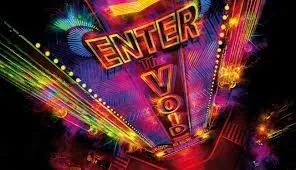
#22 – Enter the Void (2009) by Gaspar Noé
The film opens with a single, subjective shot that places the viewer inside the mind of a character experiencing his final moments. Then, after his death, the camera continues to hover over Tokyo, seeing everything, following everything. It's the most unsettling cinematic experience in this ranking. Gaspar Noé has always played with the boundaries of the medium, and this film is his most ambitious work.

#23 - Adolescence (2025) by Philip Barantini
This British Netflix miniseries became a global phenomenon upon its release. Each episode is filmed in a single, continuous take, without any cuts. The story of a 13-year-old boy accused of murder is told with a profoundly moving intimacy. Philip Barantini proved that in 2025, the long take is more alive than ever.
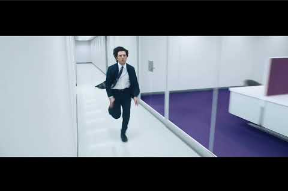
#24 - Severance - Season 2, Episode 1 (2025)
The Apple TV+ series returns with a first episode featuring a single-take sequence that has stunned fans. We follow a character through the labyrinthine corridors of Lumon Industries without any visible cuts. Severance has always played with visual conventions, and this episode marks a new level. One of the most inventive series of the moment.

#25 - The Revenant (2015) by Alejandro González Iñárritu - The Bear Attack
The Apple TV+ series returns with a first episode featuring a single-take sequence that has stunned fans. We follow a character through the labyrinthine corridors of Lumon Industries without any visible cuts. Severance has always played with visual conventions, and this episode marks a new level. One of the most inventive series of the moment.

#26 – Baby Driver (2017) by Edgar Wright
The film opens with a car chase, then the camera follows Baby down an Atlanta street in a fluid, meticulously choreographed shot. Every step, every glance, every detail of the setting is synchronized with the music he's listening to in his headphones. It's a completely new way of filming a character. From the very first minute, we know that Baby Driver is something unique.

#27 - Hard Boiled (1992) by John Woo
John Woo invented bullet ballet, a style of action where gunfights resemble dances. The final shootout in a hospital is his magnum opus: dozens of minutes of fighting, dives, and white doves, filmed with almost impossible fluidity. It's the film that has most influenced action directors of the last 30 years. Chow Yun-fat at the height of his fame.

#28 - The Honor of the Dragon (2005) by Prachya Pinkaew
Tony Jaa ascends a staircase and takes on dozens of opponents in a single, continuous shot lasting several minutes. No special effects, no wires, no editing to mask the blows. It's pure Muay Thai filmed with a camera spiraling around him. This shot made Tony Jaa an international star and remains one of the most stunning moments in Asian action cinema.

#29 - Snake Eyes (1998) by Brian De Palma
Brian De Palma is obsessed with the long take, and Snake Eyes opens with one of his most virtuosic. For fifteen minutes, we follow a corrupt detective, played by Nicolas Cage, backstage at a boxing arena. The camera weaves its way through the dressing rooms, the corridors, and finally to the ring, all in one continuous dance. It's pure De Palma: flamboyant, a little crazy, and completely controlled.
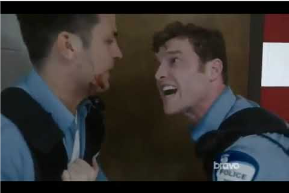
#30 - 19-2 - Season 2, Episode 1 (2015)
This Quebec police series has remained relatively unknown in France, but the opening scene of its episode "School" is legendary among TV series enthusiasts. Two police officers respond to an alert at a high school, and the camera follows them without ever cutting for nearly six minutes of absolute tension. It's one of the most realistic and honest long takes ever filmed for television.

#31 - Children of Men (2006) by Alfonso Cuarón - The Battle of Bexhill
The second major sequence in this film is just as impressive as the first, but in a completely different register. A street battle in a devastated urban area, filmed in a single take amidst the combatants. The actors and camera pause for a few seconds when a character enters the battlefield, then everything resumes. A war scene like no other.

#32 - Atonement (2007) by Joe Wright
The Dunkirk beach scene in this romantic drama lasts five minutes and shows 250,000 Allied soldiers awaiting evacuation. Joe Wright used 1,000 extras and horizon effects to create the impression of an entire army. It's a monumental long take in a film that isn't a war film. One of the finest uses of the format in British cinema.
#33 - Elephant (2003) by Gus Van Sant
Gus Van Sant films an ordinary day at an American high school before a shooting. Long sequences follow students in the hallways, their backs to the camera, without ever offering any explanation. The camera observes, records, and refuses to judge or dramatize. This radical formal choice makes the film a powerful political and emotional work. Winner of the Palme d'Or at Cannes in 2003.

#34 - Kill Bill: Volume 1 (2003) by Quentin Tarantino
The fight scene at the Crazy 88 is Quentin Tarantino's most spectacular set piece. The Bride faces dozens of opponents in a Japanese club, and the camera follows the action in an almost continuous flow, switching between color and black and white. It's kung fu, sword fighting, and slapstick mixed together in a delirious choreography. A sequence that encapsulates everything we love about Tarantino.

#35 - Magnolia (1999) by Paul Thomas Anderson
The opening of Magnolia presents, in just a few minutes, a gallery of seemingly unrelated characters with a dizzying fluidity and speed. Anderson seamlessly transitions between situations and settings with disconcerting ease. It's a film of over three hours, and from the very first minutes, you understand that you're in the hands of an exceptional director. Featuring Tom Cruise in one of his best roles.

#36 - The Place Beyond the Pines (2012) by Derek Cianfrance
The film opens with a long shot following Ryan Gosling from behind, through a carnival, to his motorcycle and the entrance to a rotating metal cage. There's no dialogue, just music and the sounds of the crowd. It's one of the best character introductions of the last ten years. From the very first second, we want to know who this man is.

#37 - Daredevil: Born Again - Season 1, Episode 1 (2025)
Daredevil's return on Disney+ begins with a lengthy fight scene in a stairwell, paying homage to the long takes that became the signature of the original series. Matt Murdock faces off against multiple opponents in a single shot, exhausted but still standing. It's both a tribute to the first series and a statement of intent for the future. Longtime fans got exactly what they were hoping for.

#38 - Mr. Robot - Episode 3.4 (2017) by Sam Esmail
Sam Esmail had the audacious idea of filming an entire episode of his series in a single, continuous take. Forty-four minutes without a single cut, with actors who couldn't possibly make a mistake. It's a completely insane production challenge for a television series. The episode is one of the most ambitious works in the history of American television.

#39 - The Haunting of Hill House - Episode 6 (2018) by Mike Flanagan
Mike Flanagan cleverly concealed two long tracking shots in this episode that many viewers missed on their first viewing. The camera glides between grieving characters in a funeral home for several minutes without a single cut. It's an emotional rather than a spectacular tracking shot, and that's precisely why it's so remarkable.

#40 - Deadpool & Wolverine (2024) by Shawn Levy
The craziest Marvel film of recent years features action sequences shot in seemingly continuous takes, with Wade Wilson and Logan engaging in a constant stream of fights. Shawn Levy aimed to pay homage to 80s action films while pushing the boundaries of filmmaking even further. It's pure entertainment, but incredibly well executed.

#41 - The Three Musketeers: D'Artagnan (2023) by Martin Bourboulon
Martin Bourboulon wanted to prove that French cinema could produce world-class swashbuckling films. D'Artagnan's fight scene is filmed in a single take, with martial choreography and an energy reminiscent of the best Hollywood adventure films. One of the most ambitious French blockbusters in a long time. And it works.

#42 - The Shining (1980) by Stanley Kubrick
Kubrick revolutionized the use of the Steadicam with The Shining. The camera follows Danny Torrance on his tricycle through the corridors of the Overlook Hotel with hypnotic fluidity. These long takes create a constant sense of unease, as if the camera were a predator stalking the child. Kubrick transformed the long take into a tool of psychological terror.

#43 - Buffy the Vampire Slayer - "The Body" (2001) by Joss Whedon
"The Body" is considered the best episode of Buffy, and probably one of the most beautiful television episodes ever made. The opening long take shows Buffy discovering her mother's lifeless body, without music, without any embellishment. Six minutes of raw emotional power that shatter any viewer's defenses. No one was prepared for that.

#44 - The X-Files - "Triangle" - Season 6, Episode 3 (1998) by Chris Carter
Chris Carter filmed an entire episode of The X-Files set in 1939 on an ocean liner, using several long takes inspired by Hitchcock. Mulder finds himself propelled into the past, and the camera almost never leaves him. It's a completely atypical episode for a science fiction series. Precisely for that reason, it remains memorable.

#45 - The Longest Day (1962)
This war film about the Normandy landings contains a spectacular long take during the attack on the Ouistreham casino. Allied soldiers advance under fire, the camera following them through the confusion and chaos, without a cut. It is one of the first great war sequences in Hollywood cinema. More than 60 years later, the scene has not aged a day.

#46 — Sinners (2025) by Ryan Coogler
Ryan Coogler's latest film, from the director of Creed and Black Panther, features a mesmerizing, single-take musical sequence that has stunned audiences. Set in the Mississippi Delta of the 1930s, this moment boasts extraordinary visual quality. With this film, Ryan Coogler confirms his status as one of the most gifted filmmakers of his generation.

#47 — The Player (1992) by Robert Altman
Robert Altman opens his film about Hollywood with an eight-minute shot set in the offices of a film studio. Dozens of characters enter and exit the frame, conversations intersect, and the camera navigates through it all with an effortless, almost natural ease. Altman even pays homage to Touch of Evil in the dialogue. A long take within a long take.
#48 - The Studio (2025)
The Apple TV+ series starring Seth Rogen as a Hollywood studio head in crisis includes an episode filmed in a single take. The chaotic behind-the-scenes of a film shoot is shown without any cuts, with the camera almost as frantic as the characters. It's a comedy, but the technical skill is impressive. A series that speaks of cinema with love and irony.

#49 - Guardians of the Galaxy Vol. 3 (2023) by James Gunn
James Gunn slipped a corridor scene into his latest MCU film that pays homage to Old Boy and its sweeping, continuous action sequences. The Guardians take down their adversaries in a white corridor with a comical and offbeat choreography. It's a superhero film that takes its time with its direction. A pleasant surprise in a universe not always accustomed to this kind of visual flair.

#50 - Kingsman: Secret Service (2014) by Matthew Vaughn
The church scene went viral just days after the film's release. A lone man takes on hundreds of opponents in a single, several-minute shot, with insane fight choreography. It was something never before seen in a mainstream action film. Millions of views on YouTube, a single take that everyone shared.