
007 Spectre sequence shot (2015)
Film title: Spectre (24th official James Bond film)
Year : 2015
Director: Sam Mendes (4th and final collaboration with Daniel Craig as Bond)
Producers: Barbara Broccoli and Michael G. Wilson (EON Productions)
Screenwriters: John Logan, Neal Purvis, Robert Wade and Jez Butterworth (based on characters by Ian Fleming)
Country: United Kingdom / United States
(DP of Photography): Hoyte van Hoytema (ASC, FSF, NSC), Dutch-Swedish, future regular DP for Christopher Nolan on Dunkirk, Tenet, and Oppenheimer
Main camera operator: Lukasz Bielan (camera A)
Steadicam operator (camera stabilized by an articulated harness): Julian Morson, used "sparingly" according to Van Hoytema, because it wasn't the film's style, except precisely in this opening sequence.
Production designer: Dennis Gassner (his 2nd collaboration with Mendes after Skyfall; they would work together again in 2019 on 1917)
Shooting format: 35mm Kodak film (a deliberate choice against the digital used in Skyfall, see "Did you know?")
Opening shot camera: Panavision Panaflex Millennium XL2 on Technocrane
Lenses: Panavision Primo 70 and Zeiss Master Prime
VFX (visual effects): Industrial Light & Magic (ILM), supervisor Steve Begg
Stitching software: Maya and Zeno (ILM's in-house software for 3D reprojection)
Composer: Thomas Newman (4th collaboration with Mendes after American Beauty, Road to Perdition, Skyfall)
Editor: Lee Smith (on Avid)
Colorist (DI, digital intermediate): Greg Fisher, using DaVinci Resolve in 4K
Shot duration: approximately 4 minutes (illusion of a continuous shot, 6 takes assembled in post)
Filming locations: Calle de Tacuba (one of the oldest streets in the Americas), Gran Hotel Ciudad de México, Zócalo (Mexico City), interior set of the room built at Pinewood Studios (London)
Date of first capture: 2:08 PM, March 20, 2015
Extras: 1 500
Makeup call: 4:15 am
Main sources: American Cinematographer (November 2015), British Cinematographer, The Hollywood Reporter, IndieWire, jamesbond007.se (extra's account)
A skull. Then a skeleton mask. Then the crowd. The camera pans over a Day of the Dead parade in Mexico City: thousands of extras in black and white costumes, giant 13-foot puppets, musicians, incense. It descends, weaves through the crowd, and finds a man in a black suit. James Bond (Daniel Craig) walks arm in arm with Estrella (Stephanie Sigman), masked like everyone else. He enters a hotel. Crosses the lobby with its Tiffany stained-glass ceiling. Takes the elevator. Goes up to a room. Kisses the girl. Then climbs out the window, onto the roof, and sets up his rifle scope on a man in the building across the street. Four minutes. Zero visible cuts. And you've just gone from celebration to death without even realizing it
Why this scene is iconic
Mendes explained his intention to American Cinematographer in very simple terms: "I wanted to put us in Bond's shoes. The single shot tells the audience: 'This is happening in real time. This is Bond, you're going to travel with him; this is your journey through this portion of the film, so sit back. Watch and concentrate, we're not letting you slip away, see how far you can go with us. When you get to the end of the shot, you'll be in it.'" It's less about virtuosity than about a moral contract with the viewer.
The Day of the Dead parade is precisely the ideal sensory experience for this exercise: colors, noise, movement, masks everywhere, death celebrated rather than feared. The continuous shot plunges you into it without transition. No establishing shot, no "Mexico City" title card, no MI6 briefing. You are in the street. And the camera's movement, from outside to inside, from the public to the intimate, from celebration to murder, is the movement of Bond himself: shifting from the smiling mask to the cold killer in a fluid gesture
The shot also reverses the usual grammar of the action blockbuster. Van Hoytema put it bluntly: "Classic opening shots start big and then tighten. We wanted to do the opposite: start intimate and then suddenly open up on an even grander scale by exiting onto the roof." This inversion is precisely what makes the sequence memorable. By the end of the shot, you're higher, more exposed, and technically a killer. You've become Bond without the cut.
How they filmed it
The continuous shot is an illusion. Six separate takes, filmed in three different locations (two in Mexico City, one at Pinewood Studios), were assembled by ILM with hidden wipesinthe transitions and 3D reprojection work.
A key decision made beforehand: film stock. Skyfall had been shot digitally with Roger Deakins and the Arri Alexa cameras. For Spectre, Van Hoytema insisted on a return to 35mm film. His justification to British Cinematographer: "I love film. It has exactly the kind of romantic quality, texture, and aura that I wanted to inject back into Bond. Digital lacks depth, and its crisp, grid-like, and harsh appearance is often mistaken for resolution." Sam Mendes supported him. Producers Broccoli and Wilson approved it after a series of comparative tests. It's the only aesthetic decision that most clearly distinguishes the grain of Spectre's image from that of Skyfall, and it's visible from the very first second of the parade.
The parade. Filmed on Calle de Tacuba, one of the oldest streets in the Americas, with a Technocrane (a telescopic crane allowing for high and low camera movements). A Panavision Millennium XL2 was mounted at the crane's head. The camera starts several meters above the street, then plunges into the crowd and zooms in to focus at Bond and Estrella's shoulder height. 1,500 extras were called in, with a makeup roll at 4:15 a.m. Hairstylist Zoe Tahir created wool wigs to give the dancers the look of timeless, articulated dolls. Production designer Dennis Gassner worked with Mexican consultants to ground the parade in a credible aesthetic.
The entrance to the hotel. First invisible cut. Bond and Estrella walk through the door of a hotel that is actually located in another part of Mexico City. ILM reconstructed this door in 3D and used reprojection (projecting a texture onto a 3D model to simulate a seamless transition) in Maya and Zeno. The lobby is that of the Gran Hotel Ciudad de México, a historic building from the Zapata era with its Tiffany stained-glass ceiling.
The lobby and the elevator. Julian Morson's Steadicam takes over. Morson is used "sparingly" on Spectre, as Van Hoytema points out; the film's overall style favors a more deliberate camera approach, except precisely in this opening sequence where the Steadicam's fluidity is essential. Morson follows Bond and Estrella through the lobby, into the elevator (shot in a single continuous take), and then into the corridor, where another cut is obscured by extras crossing the frame. ILM synchronized Craig and Sigman's movements with those of the extras to ensure the dynamics were identical between the two shots.
The room and the rooftop. The hotel room set was built at Pinewood Studios in London. The balcony was filmed in Mexico, but with significant repositioning and retiming in post-production. The view from the window is a photographicmatte painting of Mexico City, digitally composited. When Bond exits the window and walks across the rooftops, a second Technocrane follows him on a giant, three-story scaffold, as long as a city block, built specifically to accommodate the crane's rail. Van Hoytema told The Hollywood Reporter: "There was a giant scaffold the length of a city block and three stories high to accommodate the Technocrane's rail. "
A principled stance on CGI. Van Hoytema insists: there is not a single shot entirely in CGI (computer-generated imagery). Every frame contains live-action footage. The visual effects serve to stitch the shots together, clean up backgrounds, and expand crowds, not to replace reality. This is exactly the doctrine that Cuarón and Lubezki had applied nine years earlier on Children of Men : digital assembly, yes; digital fabrication, no.
Filming in Mexico City lasted nearly three weeks. The first take was recorded at 2:08 p.m. on March 20, 2015. Extras repeated the same actions all day long under the sun. A Swedish extra's account describes 20 to 30 takes for the lobby sequence, with each extra assigned a specific position and timing. Mendes told American Cinematographer, "People stayed in the streets until 5:00 p.m. doing the same thing over and over again. I thought they were going to mutiny. In fact, they were getting more and more enthusiastic. "
The helicopter sequence following the long take, with a real helicopter piloted by Chuck Aaron above the Zócalo just a few meters from the actual crowd, is another bravura piece in the pre-credits sequence, but it's a classic montage, not a continuous shot
What to observe when reviewing it
The hotel entrance (~1:30) This is the most ambitious cut in the sequence. The door Bond walks through was rebuilt in 3D by ILM. Look for a slight change in brightness or texture between the exterior and the lobby. If you find it, you're better than most viewers and critics.
The stained-glass ceiling of the Gran Hotel (~2:00) The lobby of the Gran Hotel Ciudad de México is recognizable by its Art Nouveau Tiffany ceiling. It's also where some scenes from Licence to Kill (1989) were filmed, 26 years earlier. Bond returns to where Bond has already been.
The Rooftop Exit (~3:30) Watch the shot scale reverse. You were indoors, in close-up, in the intimacy of a hotel room. In a second, you're on the rooftops of Mexico City with the entire city spread out before you. Van Hoytema conceived this reversal as the visual twist of the sequence, and it's also the moment when the second Technocrane takes over on its giant scaffolding.
Did you know?
The film that invented a real tradition: The Day of the Dead parade as seen in the film didn't exist in Mexico City before Spectre. There were local and private celebrations, but no public parade of this scale in the historic center. After the film's release, tourists flocked there looking for "the James Bond parade." In 2016, the Mexican government decided to create a real annual parade, inspired by the one in the film. This is one of the rare cases in film history where a blockbuster invents a cultural tradition that then becomes a reality.
The influence of Live and Let Die (1973): Sam Mendes and Daniel Craig both cited Live and Let Die, Roger Moore's first Bond film, as inspiration for the voodoo and macabre atmosphere of the opening. The reference is more visible in the masks and funereal puppetry than in the pacing.
The gamble taken with the film Van Hoytema forced a return to 35mm film after Deakins' digital Skyfall. His stated justification: film has a "romantic quality" that digital cannot reproduce. The grain visible in the Day of the Dead parade is the most immediate proof of this. It is also one of the last major Hollywood productions to be shot primarily on film before the definitive shift to digital.
The Mendes/Gassner duo: This is the second Mendes/Gassner collaboration after Skyfall. Gassner would reunite with Mendes on 1917 in 2019, where the wooden models he built to plan the long takes were directly inherited from the preparatory work on Spectre. The method is the same: a physical 1/24 scale model, camera paths drawn on top with markers, and choreographic fine-tuning before filming.
Record-holder Barbara Broccoli: Producer Barbara Broccoli described the sequence as "one of the greatest pre-credits sequences we've ever made" for the franchise. At seven minutes in total (the single-take shot plus the helicopter chase), it's one of the longest pre-credits sequences in the history of Bond films.
Hoyte van Hoytema, future director of photography for Nolan's Spectre, is one of the moments when Van Hoytema's career definitively shifted towards the top of the Hollywood pyramid. Christopher Nolan would later recruit him for Dunkirk (2017), Tenet (2020), and Oppenheimer (2023). The expertise in long takes acquired on Spectre is directly reflected in several sequences of Tenet, notably the Kiev opera house and the highway.
Sources
Sam Mendes, interview with American Cinematographer (November 2015, by Benjamin B)
Hoyte van Hoytema, interview British Cinematographer
Hoyte van Hoytema, interview The Hollywood Reporter (November 7, 2015) - "How 'Spectre's' Opening Scene Pulled Off the 'Birdman' Effect"
IndieWire - "How They Pulled Off the Specter of Death Opening in Mexico City" (November 2015)
American Cinematographer - "Sinister Sect: Specter" (November 2015)
007.com - "Focus of the Week: Spectre's Day of the Dead scene" (2020)
jamesbond007.se - "The SPECTER Day of the Dead filming in Mexico City" (story by a Swedish extra, 2016)
Yahoo UK Movies - "How That Amazing Opening Specter Scene Isn't All It Seems" (2015)
Roman's Lab - "Deconstructing Spectre" (geographical analysis of places, 2024)
IMDb - Spectrum FAQ
ShotOnWhat - Spectre (2015), technical specifications
Read also
1917 (2019) – The same team (Mendes + Gassner) takes the method from Spectre and expands it to the scale of an entire film. The wooden models used to plan the long takes in 1917 are directly derived from the preparatory work for Spectre.
The long take in Children of Men – the car ambush (2006) – in 2006, Cuarón and Lubezki established the doctrine "digital assembly yes, digital fabrication no," which Van Hoytema adopted verbatim for the Day of the Dead parade.
Birdman (2014) long take – Another essential reference point for the "fake long takes" of 2014-2015. Iñárritu and Lubezki proved that it was possible to maintain two hours of seamless editing; Mendes applied this technique to his pre-credits sequence the following year.
True vs. false long takes - the complete guide - How 6 takes shot in 3 locations become 4 minutes of continuous illusion: the mechanics of ILM editing explained step by step.
Watch the film & go further
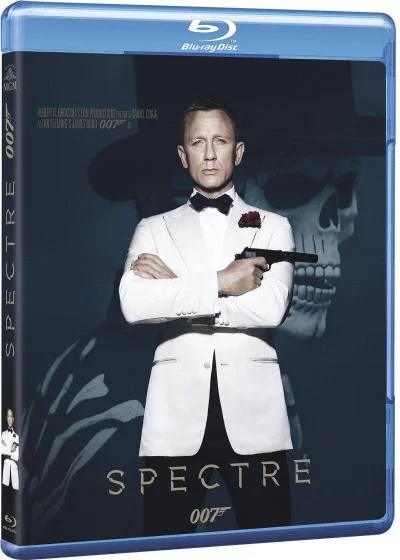
Watch the film:
Recommended reading:
- Special Effects: A Century of Stories - Pascal Pinteau
The French reference on the history of special effects in cinema, full of testimonies from technicians on this precise type of trickery (masked transitions, reprojection, assembled shots) is exactly the subject of this sheet.
The links to Amazon are affiliate links: your purchase supports plan-sequences.com at no extra cost to you.
