
Film title: Goodfellas
Year: 1990 (Venice IFF September 9 - Silver Lion for Best Director / US release September 19)
Director / Co-writer: Martin Scorsese
Co-writer: Nicholas Pileggi (author of the source book Wiseguy, 1986)
Country: United States
Producer: Irwin Winkler
Director of Photography: Michael Ballhaus (ASC)
Steadicam operator: Larry McConkey
First assistant director: Joseph Reidy
Editor: Thelma Schoonmaker (BAFTA for Best Editing for this film)
Key players in the plan: Ray Liotta (Henry Hill), Lorraine Bracco (Karen Friedman), Henny Youngman (himself)
Camera: Arriflex 35 BL4S (quiet enough for the end dialogue)
Optics: Zeiss Super Speed (essential in the dim light of the club)
Technical tip: a video monitor mounted above the Steadicam so McConkey could frame shots while walking backwards – an innovation for 1990.
Shot duration: 2 min 59 sec (184 seconds)
Number of takes: 8 - completed before lunch
Music: “Then He Kissed Me” The Crystals (1963)
Literary source: Wiseguy by Nicholas Pileggi (1986), 40 words describing the entrance through the kitchen
Film duration: 146 minutes
Budget: $25 million (Scorsese's biggest budget at the time)
Box office: $47.1 million
Oscars: 6 nominations (Best Picture, Director, Adapted Screenplay, Editing, Supporting Actress, Supporting Actor), 1 win (Joe Pesci)
Henry Hill (Ray Liotta) gets out of his car, slips a bill to the valet, takes Karen (Lorraine Bracco) by the hand, and leads her. Not through the Copacabana's main entrance. Through the back door, the service stairs, a long underground corridor, the kitchen filled with Chinese cooks, and straight to the performance hall where a table appears out of nowhere, placed in front of the stage just for them. Henny Youngman is on stage. Strangers throw champagne. Karen asks Henry what he does for a living. Three minutes. Not a glass. And you've just learned what it's like to be a mobster.
Why this scene is iconic
The entire film is contained in this shot. Not the plot, the feeling. Scorsese doesn't explain Henry Hill's power to you; he makes you experience it. Doors open before he even arrives. People call him by his first name. There's no queue. You're right behind him, pressed against his shoulder, and you feel exactly what Karen feels: the dizzying feeling of being with someone for whom the rules don't apply.
The shot doesn't cut because the experience doesn't cut. The intoxication of power is a continuous flow, without pause, without respite, without a moment to reflect. If Scorsese had edited the scene classically— a close-up of the banknote, a close-up of Karen's face, a close-up of the table—you would have had time to step back. As it is, you are trapped by the spell. Karen's seduction and the viewer's seduction are one and the same.
The narrative function is threefold. First, this shot seals the Henry-Karen relationship: it's the meeting that decides everything. Second, it establishes Henry's status without a single line of exposition; there's no need for dialogue about his place in the mafia, you see the network in action. Third, it sets the stage for the coming downfall: everything that opens here will close later. The entire film is the story of the gradual closing of all these doors. But at this precise moment, they all open at once. That's why the scene stays with you: you know, deep down, that it can't last.
How they filmed it
The plan wasn't originally intended that way. The Copacabana refused to let the crew film the main entrance. Scorsese had to improvise an alternative route: the service entrance, the corridors, the kitchen. What was meant to be a constraint became the most famous shot of his career.
McConkey recounted the first rehearsal to Filmmaker Magazine. Scorsese wanted a close-up of the ticket given to the valet, then the camera followed Henry and Karen. They crossed the street, went down a flight of stairs, and walked down a long hallway. McConkey looked at his watch and thought, "This is already the worst dead time in the history of cinema. It'll never work." When they got to the kitchens, Ballhaus said, "Marty, we have to go through the kitchen." Scorsese asked why. Ballhaus replied, "Because the light is magnificent." Scorsese said OK. They went into the kitchen and came out through the same door, the route forming a circle, masked by a change of extras and set.
Scorsese shows McConkey the result of the rehearsal, then announces, "OK, I'll be back in two hours." He leaves. McConkey is panicking. Ray Liotta sees his face and suggests he stay to refine the blocking. Liotta and first assistant director Joe Reidy stay, and they rework the shot while Scorsese is away. It's during this session that Liotta improvises many of the interactions in the hallway—the handshakes, the greetings, the little remarks to the extras—that give the shot its lively texture.
When Scorsese returned and saw the result on the monitor, he shouted, "No! No! No!" McConkey thought his career was over. But Scorsese only criticized one detail: the table that appeared for Henry and Karen at the end of the shot. "It has to fly toward the camera and fill the frame. When I was a kid, I used to go to clubs like that, and the thing I remember most is how a table would appear out of nowhere." That was his only note.
They filmed that same evening. Eight takes and it was in the can before lunch. McConkey carried an Arriflex 35 BL4S, quiet enough to capture the final dialogue, equipped with Zeiss Super Speed lenses, essential in the club's darkness. A small video monitor was mounted above the Steadicam so he could check his framing while walking backwards, an unusual technical trick for 1990. Joe Reidy summed it up: "There were 400 absolutely precise synchronization points. It was totally impossible, mathematically."
The Crystals' "Then He Kissed Me" soundtrack was chosen by Scorsese and plays over almost the entire shot. The only real dialogue comes at the very end, when Karen asks Henry what he does for a living. Producer Irwin Winkler recounts in his book that six or seven takes were nearly perfect, but each time, some mechanical or dramatic detail went wrong. On one technically flawless take, Henny Youngman botched his iconic line, "Take my wife, please," a punchline he had delivered thousands of times over forty years on stage. Five more takes were needed. When Youngman finally nailed it, the crew applauded the comedian.
What to observe when reviewing it
The ticket to the valet (first second) The very first image of the shot is a close-up of Liotta's fingers sliding a ticket. The money literally opens the scene and everything that follows. Not a word. Just a gesture.
The kitchen scene (~1 min 30): Henry and Karen enter and exit through the same door. The extras and props change as they go around to conceal the loop. Look for the stacks of plastic crates that appear against the bare wall through which they entered; this is the visible trace of the sleight of hand.
Liotta's improvisation in the hallway (~2 min) The handshakes, the bows, the "Henry!" shouted by the extras: most of it is unscripted. It dates back to the rehearsal Liotta did with Reidy while Scorsese was away. You are watching an actor choreographing his own social status live.
The flying table (~2 min 30) Notice the speed at which the table and chairs arrive in front of the stage. This is the only detail Scorsese insisted on changing after the rehearsal. He wanted the table to fill the frame as in his childhood memory of Manhattan clubs.
Did you know that?
Larry McConkey filmed the two most famous long takes of 1990: this one and the opening of Brian De Palma's *The Bonfire of the Vanities*, released the same year, using the same Steadicam. Two backstage journeys, two entrances through the back door, two visions of power: Scorsese puts you right in the middle, De Palma shows you the other side of the coin. McConkey shot both six months apart.
The Copa Shot originated from a forty-word sentence in Nicholas Pileggi's novel Wiseguy: the doormen let Henry Hill in through the kitchen, full of Chinese cooks, and seated him directly at his table. Scorsese transformed this sentence into three minutes of cinema. And this technique—a long take to draw a character into his world—permeated everything that followed: the opening of Boogie Nights (Paul Thomas Anderson, 1997, Steadicam in the porn nightclub), Birdman (Iñárritu/Lubezki, 2014, a single, deceptively long shot backstage on Broadway), the opening of The Place Beyond the Pines (Cianfrance, 2012, a journey through the carnival). Anderson, Iñárritu , and Cianfrance have all cited Goodfellas as a model.
A taxi driver recognized McConkey a few years later and said, "Steadicam, yeah, like in Goodfellas, the Copacabana." McConkey recounted that it was that day he understood that audiences, even without knowing the technique, felt the narrative power of a continuous shot. And there's one last detail: the sixth episode of Family Guy's 17th season (2018) copies the shot almost frame for frame. Chris enters his new school, greeted by the entire staff, a table set in front of him, with the same Crystals music playing. When a Fox parody cartoon reuses your shot 28 years later, you've created something unassailable.
Sources
Larry McConkey, interview Filmmaker Magazine - "Steadicam Operator Larry McConkey on Filming the Goodfellas Copacabana Tracking Shot" (April 2015)
Irwin Winkler, A Life in Movies: Stories from 50 years in Hollywood (Abrams Press, 2019)
Glenn Kenny, Made Men: The Story of Goodfellas (Hanover Square Press, 2020)
Cinephilia & Beyond - "Goodfellas at 35: Martin Scorsese's Anthropological Masterpiece"
No Film School - "How Was the Copa Long Take in Goodfellas Shot? Let the Steadicam Op Explain"
The Mob Museum - "Mob classic Goodfellas debuted in theaters twenty-five years ago" (2015)
MovieMaker - "How the Goodfellas Three-Minute Tracking Shot Got Messed Up in the Silliest Way" (2023)
The Spool - "The Copa Shot: Martin Scorsese's Best Short Film"
GQ - Interview with Joseph Reidy
Far Out Magazine - "The seminal Steadicam of Martin Scorsese's Goodfellas" (2024)
IMDb - Goodfellas (1990), Awards section
Wikipedia - Goodfellas / Thelma Schoonmaker
Also read:
Boogie Nights (1997) opening sequence shot https://www.plan-sequences.com/categories-de-plans-sequences/boogie-nights-plan-sequence-1 - Another iconic opening shot by Paul Thomas Anderson, with the same energy of total seduction
True vs. False Long Takes - The Complete Guide https://www.plan-sequences.com/blog-plan-sequences/vrais-vs-faux-plans-sequences-guide-complet - To understand why the Copa Shot is a true long take without a hidden cut
Watch the film & go further
Watch the film:
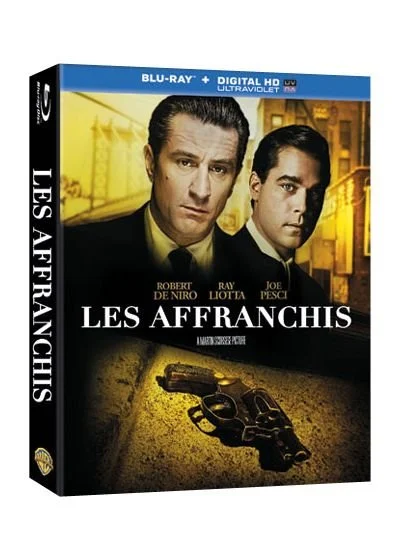
- Goodfellas — 25th Anniversary Edition, Digibook + Digital Copy (Amazon)
Recommended reading:
- Goodfellas: Daily Life in the Mafia — Nicholas Pileggi
The source book for the film, written by the journalist who collected Henry Hill's confessions - the true story behind Scorsese's screenplay.
The links to Amazon are affiliate links: your purchase supports plan-sequences.com at no extra cost to you.
