
Sequence shot: definition, history, techniques and cult films of cinema
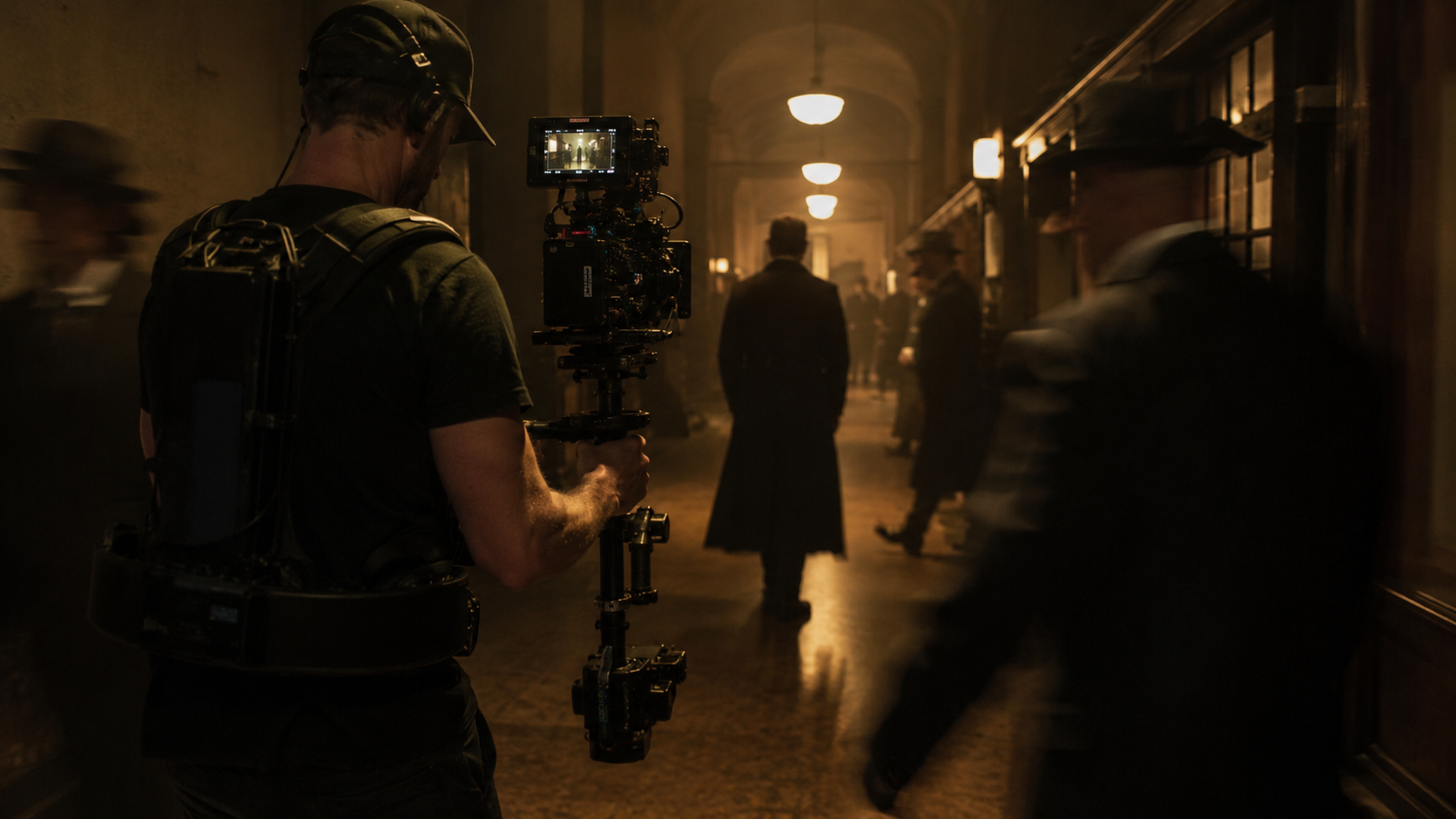
You will understand everything about the long take: what it really is, where it comes from, how it is shot, why the greatest directors keep coming back to it, and which films you need to have seen to grasp the scope of the technique.
Summary
What is a sequence shot? The precise definition
A brief history of the long take: 130 years in fast forward
How is a long take filmed? Filming techniques
Why do directors choose the long take?
The long take by genre: action, drama, horror, series
12 iconic long takes you absolutely must see
The 5 classic mistakes when attempting a sequence shot
FAQ - Frequently Asked Questions
Introduction
You've probably experienced this feeling at the movies. A scene that just goes on and on. The camera follows a character through a corridor, a street, a battlefield. No cut. No breath. You're trapped in the shot with them. And after three, five, or ten minutes, you realize you haven't blinked
That's what a long takeis. A single, continuous shot, without internal editing. A directorial choice that can turn a mundane scene into an unforgettable moment and an ambitious scene into a memorable fiasco.
This technique has fascinated audiences from Rope (1948) to Adolescence (2025). It has survived film, the arrival of digital, the Steadicam, and motorized gimbals. And it keeps coming back because it offers something no other narrative tool can produce: real time shared between the camera, the characters, and you.
This article provides a comprehensive overview of the subject. Its technical definition, its history, filming methods, and examples that have shaped cinema ( Goodfellas, Children of Men, Russian Ark, Victoria, 1917 ) and those that are prevalent in today's television series. If the long take intrigues you, you'll find everything you need here to discuss it with the enthusiasm of a true enthusiast.
1. What is a sequence shot? The precise definition
A long take is a sequence filmed in a single, continuous shot, without cuts or editing between shots. It begins when the camera starts and ends when it stops. No changes of angle in editing, no cuts, no ellipses.
It's the exact opposite of classical editing. Where a classical scene alternates wide shots, medium shots, and close-ups to build rhythm, the long take keeps everything in a single breath.
How long does it take to talk about a long take?
There is no official duration. But the consensus among film buffs is around a minimum of 10 seconds. Less than that, it's simply considered a long take. Beyond that, the shot takes on a narrative dimension that makes it a full-fledged sequence shot.
Some films go much further. Alexander Sokurov's Russian Ark (2002) is a single 96-minute take , the entirety of the film. Sebastian Schipper's Victoria (2015) is shot in a single take for 138 minutes . At the other extreme, the Copacabana bar sequence in Goodfellas lasts three minutes and remains one of the most studied in film history.
True long take vs. false long take
Beware of the trap here. Most of the "one-shot" films you've seen are fake one-shots. That is, films composed of several shots digitally stitched together to give the illusion of a single take.
1917 by Sam Mendes: a fake one-shot. Dozens of invisible cuts hidden in rapid pans, transitions on dark walls, passages in trenches.
Birdman : a false single-take shot. Filmed in 5- to 10-minute shots, assembled in post-production.
Russian Ark and Victoria : true long takes. A single shot, without any cuts.
This distinction is crucial. For an overview of invisible join techniques used by professionals, see the dedicated article for details.
Other names for the sequence shot
The technique has several names depending on the era and language. In English, it's called a long take or an oner (pronounced "wunner"). In French, plan-séquence is the established term, sometimes replaced by "plan unique" or "prise continuous".
For an even more detailed definition, including narrative uses and the distinction from sequential filming, the website's definition page discusses it in depth.
2. A brief history of the long take: 130 years in fast forward
The long take is as old as cinema itself. And paradoxically, it took decades for it to become an artistic choice
Before 1948: the default long take
The Lumière brothers' first films (1895-1896) are technically long takes. Works like *Workers Leaving the Lumière Factory* and *Arrival of a Train at La Ciotat * are single, fixed shots, without cuts. But this wasn't a deliberate choice. Editing didn't yet exist. When Méliès and then Griffith invented classical shot composition in the 1900s and 1910s, the continuous shot became the exception.
1948: Hitchcock dares The Rope
With Rope, Hitchcock created the first film conceived as a single 80-minute take. The technique was rudimentary; he concealed the cuts between 10-minute reels behind dark objects, but the intention was revolutionary. The artistic gesture was born .
1958: Welles establishes modern grammar
The opening of Touch of Evil lasts over three minutes. A crane, a car bomb, a camera that follows. The tension lies in the duration itself. Welles proves that a single continuous shot can generate suspense impossible to achieve through editing.
1975: The Steadicam changes everything
Garrett Brown invented the Steadicam. For the first time, the camera could follow a character everywhere (stairs, corridors, crowds) with the fluidity of a ghost. Five years later, Kubrick filmed Danny in the corridors of the Overlook Hotel for The Shining (the tracking shot with the Big Wheel remains an absolute benchmark).
1990: Scorsese and the Copacabana
The Copacabana long take in Goodfellas instantly became a classic. Three minutes. The Steadicam follows Henry Hill and Karen through the kitchens, the corridors, to their table which appears as if by magic. A masterclass in directing that still inspires today.
2002-2015: The Digital Revolution
The arrival of digital technology has eliminated the limitations of film reels. Sokurov shot Russian Ark in a single 96-minute take in 2002. Schipper directed Victoria in 2015, a 138-minute film shot in a single take on the streets of Berlin. Cuarón and Lubezki redefined the standards with Children of Men (2006) and then Gravity (2013).
2014-present: the conquest of TV series
True Detective season 1 (2014) marked a turning point. Six minutes of continuous shooting in a raid gone wrong. Then came Daredevil, Mr. Robot, Severance, The Studio, and Adolescence on Netflix (2025), where each episode is filmed in a single take.
Pro tip : To truly understand the evolution of the technique, step by step, the article " History of the long take in cinema: from its origins to today" goes into detail about each period, from forgotten precursors (Renoir, Ophüls) to contemporary masters.
3. How is a long take filmed? Filming techniques
Filming a long take is nothing like shooting a regular scene. Everything has to be planned in advance. The slightest mistake—an actor missing their cue, a background noise, an extra in the wrong position—forces you to start all over again
Preparation is 90% of the work
For Adolescence, there were three weeks of preparation per episode : one week of emotionally focused dry runs, one week of technical rehearsals (camera, grip equipment, lighting), and one week of final takes. For Russian Ark, Sokurov rehearsed for months before shooting the single take.
The rule is simple: the longer the plan, the longer the preparation. For detailed preparation techniques, the complete guide to creating a sequence plan covers all the steps.
The equipment: from Steadicam to motorized gimbal
Three main categories of tools:
The Steadicam (since 1975): a harness that isolates the camera from body movements. Expensive, heavy, requires specialized operators.
Motorized gimbals (DJI Ronin, Movi): since 2014, these electronic stabilizers have democratized long-take shooting. Much lighter, they are accessible to independent filmmakers.
The drone : for seamless aerial transitions. Used notably in Adolescence to move from an aerial shot to a close-up without a cut.
The details of equipment choices are covered in the complete equipment guide for long takes.
Camera movements: the grammar of the long take
A long take isn't just a long shot. It's a choreography. The camera must know when to follow, when to pull back, when to pivot, when to give way. Tracking shots, dolly outs, whip pans, high-angle shots, low-angle shots—every movement tells a story. A complete analysis of camera movements in a long take is covered separately.
Invisible seams: cheating without cheating
For "fake" long takes, the art lies in concealing the cuts. Three main techniques:
The dark wall : the camera passes in front of a black object that fills the frame; this is the cut point. Used in Rope, Birdman, 1917.
The whip pan : a very fast pan blurs the image; you can cut during the blur.
Digital morphing : in post-production, two shots are blended pixel by pixel to give the illusion of continuity.
Pro tip : A well-executed fake long take is often better than a poorly executed real one. 1917 would have been impossible to film in a single, actual take. The illusion matters more than raw technical prowess. What counts is the effect on the viewer, not the orthodoxy of the technique.
4. Why directors choose the long take
The long take is never a whim. When it works, it's because it serves a specific purpose. Here are the five main reasons why a director might not cut
1. To create total immersion
Editing allows the viewer to breathe. A cut is a moment when the eye rests, when the brain anticipates. The long take eliminates this respite. You are trapped in the scene with the characters. You see time passing at the same time as they do. Son of Saul (László Nemes, 2015) uses this principle to keep you glued to a Sonderkommando at Auschwitz for the entire film. Unbearable, and that is precisely the point.
2. To amplify the voltage
When you know a bomb is about to explode and the shot refuses to cut, your tension mounts second by second. Welles understood this in Touch of Evil. Cuarón takes it to the extreme in Children of Menwiththe car ambush. The unity of time becomes a threat.
3. To reveal the virtuosity of the actors
Without editing, an actor must hold their scene from beginning to end. No second takes to recapture the emotion. No breaks to catch their breath. It's terrifying for the actors and fascinating for the viewer. Michael Keaton in Birdman, Jacek Stryczek in The Chef (Boiling Point) (Philip Barantini, 2021), performances in single takes are marathons.
4. To give the illusion of reality
No cuts, no visible manipulation. The long take simulates real time. It's the main weapon of "social" cinema—the Dardenne brothers, Loach, and more recently Adolescence —to suggest that there's no deception. The witness camera replaces the narrator camera.
5. For the sheer beauty of the gesture
And sometimes, it's simply for the sake of beauty. The Copacabana tracking shot in Goodfellas creates neither tension nor social realism. It simply makes you feel what it's like to be Henry Hill: untouchable, famous, welcomed everywhere. Three minutes to understand an entire life.
Pro tip : A bad long take is immediately obvious; it "shows off" without serving the story. A good long take is invisible. You don't notice the technique because you're immersed in the scene. This is precisely what the analysis of why the length of a long take changes everything : length is never gratuitous; it creates meaning.
5. The long take by genre: action, drama, horror, series
Each genre uses the long take differently. Here are the main categories, with essential references, all categorized on the website.
Action: Real-time choreography
Action is the natural playground for the spectacular long take. The corridor inOldboy, the fights in Daredevil, the shootouts in Kingsman, the stunts in Atomic Blonde. When the shot doesn't cut, the violence becomes real. No jump cuts to inject dynamism into a botched shot. The actors have to perform everything live.
Drama: Prolonged intimacy
In drama, the long take serves the emotion. No cuts are made to avoid the actor stumbling upon a tearful face. The childbirth scene in Pieces of a Woman (24 minutes, almost a single take) is the absolute example. The camera stays, the viewer stays; the emotion cannot be softened by protective editing.
Horror: Anxiety through duration
Horror films use the long take to generate a particular kind of anxiety: the fear of being unable to look away. The Haunting of Hill House builds its sixth episode on this principle; the camera stays, you stay, what happens on screen cannot be softened by a cut. This is analyzed in detail in the dedicated review.
TV Series: The New Playing Field
Television series have become the most creative arena for the long take over the last decade. Examples include True Detective S1E4, Adolescence (each episode a single, continuous shot), Mr. Robot, Severance, Buffy the Vampire Slayer, The X-Files "Triangle," and The Studio in 2025. The episodic format has liberated directors: a showrunner can dedicate an entire episode to a single take without disrupting the season's structure.
6. 12 iconic long takes you absolutely must see
A selection of twelve long takes that cover all the uses of the technique. If you really want to understand the richness of the genre, start with these
1. The Rope (Alfred Hitchcock, 1948)
The seminal film. Conceived as a single 80-minute take, it was actually composed of 10-minute shots stitched together behind dark objects. Imperfect, but visionary. Detailed information.
2. Touch of Evil (Orson Welles, 1958)
The opening scene with the car bomb. Three minutes shot with a crane. Welles invents the modern grammar of suspense in a single take. Watch it here.
3. Shining (Stanley Kubrick, 1980) - Danny and the Big Wheel
A 6-year-old boy on a plastic bicycle. Endless corridors. A camera 30 cm from the ground, operated by Garrett Brown himself, the inventor of the Steadicam. Full details here.
4. Goodfellas (Martin Scorsese, 1990) - The Copacabana
The definitive Steadicam recording. Three minutes, from the kitchen to the table. Scorsese makes you feel the intoxication of mafia power without a word of explanation. Full analysis.
5. Russian Ark (Alexandre Sokurov, 2002)
96 minutes. One single shot. The entire Hermitage Museum. More than 2,000 extras. One successful take after several attempts. A logistical feat unique in the history of cinema
6. Oldboy (Park Chan-wook, 2003) - The corridor
A fight in a corridor, filmed from the side. The hero faces off against about ten opponents with a hammer. Brutal, exhausting, real. See the details here.
7. Children of Men (Alfonso Cuarón, 2006) - The Car
The camera rotates 360° inside the passenger compartment while the car is being attacked. A custom-built rig was designed for this shot. The full analysis reveals the complexity of the setup.
8. Hunger (Steve McQueen, 2008) - The Conversation with the Priest
17 minutes. A motionless camera. Bobby Sands and a priest. On the third take, the boom operator collapses. The fourth take is kept. The story behind the take.
9. Gravity (Alfonso Cuarón, 2013)
The first 13 minutes are filmed in a single take. A complex digital montage blending live-action footage and CGI. The illusion is perfect; you float with the astronauts
10. Birdman (Alejandro González Iñárritu, 2014)
An entire film conceived as a single take. A false take, dozens of hidden cuts. Winner of the 2015 Academy Award for Best Picture
11. Victoria (Sebastian Schipper, 2015)
138 minutes in a single take, in Berlin at night. No cuts, no CGI. The third time was the charm. See the full details.
12. Adolescence (Netflix, 2025)
Each episode is filmed in a single, continuous shot. Shot on a DJI Ronin 4D camera, drone footage, and strategic use of extras. The grammar of the long take taken to its ultimate conclusion in a series. Series analysis and dedicated fact sheet.
To delve deeper, the site's Top list offers a personal ranking including 19-2, Victoria, Extraction , and Pieces of a Woman. And the analysis of 7 stunning long takes where invisible cuts create cinematic magic specifically explores the question of fake long takes.
7. The 5 classic mistakes when attempting a sequence shot
If you're a videographer, film student, or aspiring director and you want to try shooting in a single take, here are the pitfalls to avoid. It's a short list, but every mistake can ruin a day of filming
Don't underestimate preparation. A long take requires three times longer preparation than its shooting time. If you improvise, you'll fail.
Trying to show off. A long take "just for show" is immediately obvious. If the scene worked better with cutaway shots, you're hurting your film.
Neglecting the sound. No sound editing is possible. The slightest background noise (airplane, car, a technician coughing) will ruin the take. The sound must be prepared with as much care as the image.
Overestimating your actors. Maintaining a flawless performance for five minutes—acting, moving, and in sync—is a feat. If your actors aren't ready, the plan won't work.
Forget plan B. A failed long take means a wasted day. Always have a backup, conventional shot breakdown for the same scene.
The complete list of 10 fatal mistakes to avoid when shooting a single-shot sequence goes into detail about each pitfall, with concrete counter-examples.
8. FAQ - Frequently Asked Questions
What is the difference between a sequence shot and a long take?
A long take is simply a shot that lasts longer than average. A sequence shot is a shot that contains an entire scene, or a significant narrative portion, all on its own. Duration plays a role, but what defines a sequence shot is its narrative function : it carries the scene; it's not just a fragment.
What was the first long take in the history of cinema?
The Lumière films (1895-1896) were technically long takes, but without artistic intent. The first long take conceived as an artistic gesture is generally attributed to Rope (1948), even though Renoir and Ophüls were already experimenting with long takes in the 1930s and 40s.
What is the longest single-take film ever shot?
For a theatrical feature film, Victoria (138 minutes in a single take) holds the record. For a more experimental feature film, Russian Ark (96 minutes) remains the best-known example. The Netflix series Adolescence films each episode in a single, continuous shot (25-35 minutes).
How to recognize a fake long take?
Look for suspicious transitions: a very rapid pan that blurs the image, a movement behind a wall or dark object, a transition in darkness, an aerial shot that becomes a close-up without a visible cut. If you see any of these moments, you've probably spotted an invisible cut
Is the long take necessarily a technical feat?
No. The Turin Horse (2011) is composed of 30 shots in a 2-hour and 25-minute film. No spectacular feats, just very long shots, static or with minimal movement. The long take can be contemplative, slow, almost motionless.
Does it take a huge budget to shoot a single-take film?
No. Victoria had a modest budget for a feature film. What's expensive isn't the equipment, it's the preparation time. With a motorized gimbal costing a few hundred euros and a decent digital camera, any independent videographer can shoot a technically sound single take. The real barrier is rigor.
Are there any films shot entirely in a single take?
Very few. Russian Ark (Sokurov, 2002) and Victoria (Schipper, 2015) are the benchmarks. Rope (Hitchcock, 1948) claims to be one but uses splices between reels. 1917 and Birdman are pseudo-long takes assembled in post-production. The rarity of truly complete long takes demonstrates the logistical difficulty of the process.
Conclusion
The long take isn't a fad. Since 1948, it has returned regularly because it offers something unique: real, shared time, without any apparent manipulation between the camera, the characters, and the viewer. When it works, you stop thinking about the technique. You're in the scene. You stay there. You come away with a physical sensation that traditional editing can't produce
From Hitchcock to Adolescence , by way of Scorsese and Cuarón, each generation has added a tool—the Steadicam, digital technology, the gimbal, the drone—and each has allowed us to go a little further. The next great chapter may be written in series, perhaps in cinema, perhaps on smartphones. But one thing will not change: the long take is only powerful when the director knows how to answer a simple question: why not cut here ?
👉 To delve deeper, plan-sequences.com offers over 100 detailed analyses of iconic long takes, categorized by genre, including behind-the-scenes anecdotes, technical choices, and insights into each scene. Subscribe to the newsletter to receive a new analysis every month.
